


The City of Hoboken's Grand Street Complete Streets Pilot between Third and Eighth Streets aims to enhance safety, mobility, and accessibility for all who travel along the corridor.
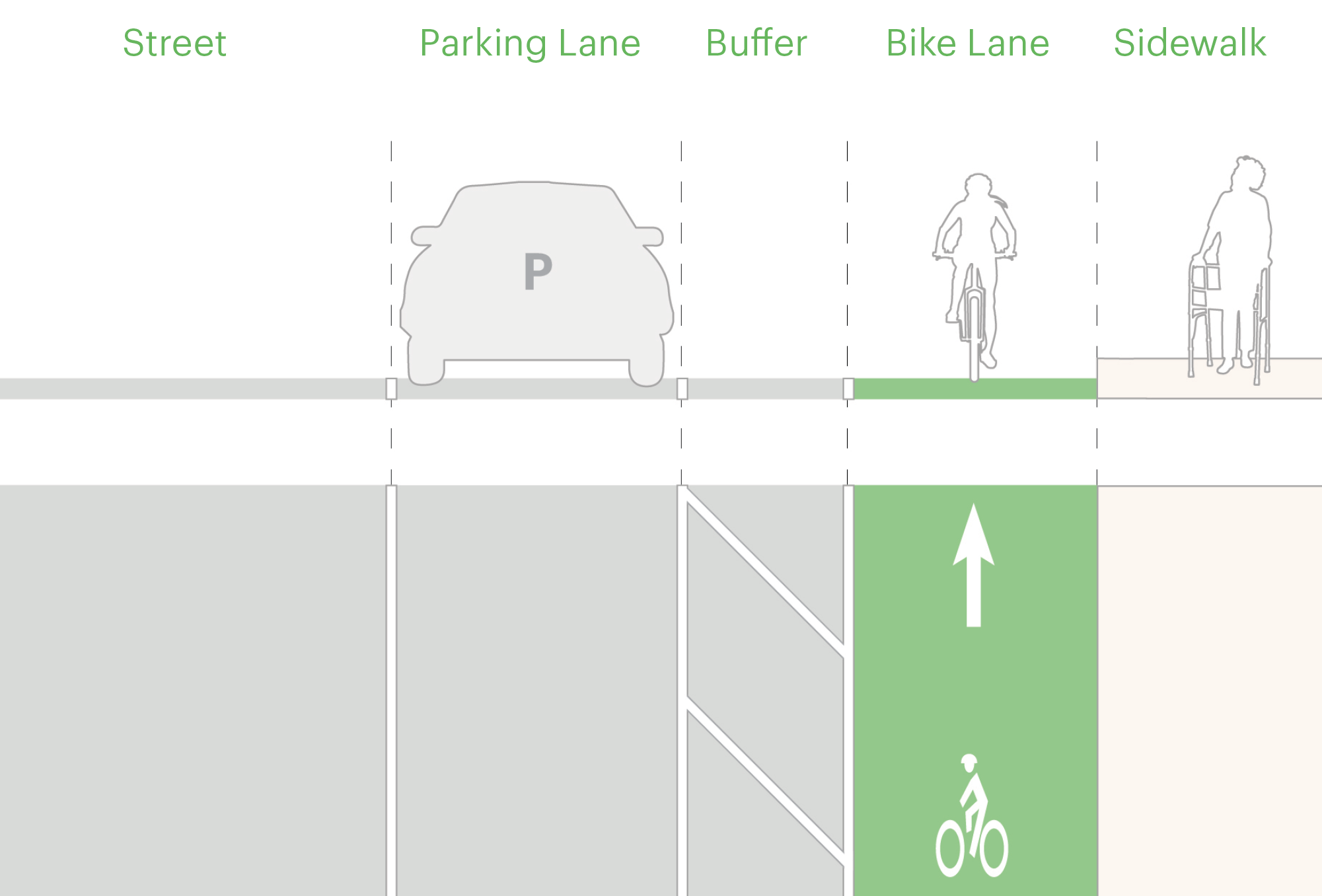
The pilot introduces key Vision Zero improvements, including a new protected bike lane, high-visibility crosswalks, curb extensions, and upgraded ADA ramps while testing new curbside management strategies to reduce double parking on the residential street.
The project will test whether delineated parking spaces improve parking compliance and availability and adds bike parking in daylighting areas. It also includes green infrastructure. Combined, these components aim to create a safer, more efficient, and sustainable Grand Street.
Over the next year, the City will monitor the street through data collection and gather community feedback to direct adjustments and help determine whether to make the improvements permanent.
This pilot project comes after the Hoboken Water Utility and Veolia replaced drinking water infrastructure underground to improve service reliability.
For more information on the Grand Street Pilot, read the latest City Council memo by clicking HERE.
The City of Hoboken's Grand Street Complete Streets Pilot between Third and Eighth Streets aims to enhance safety, mobility, and accessibility for all who travel along the corridor.
The pilot introduces key Vision Zero improvements, including a new protected bike lane, high-visibility crosswalks, curb extensions, and upgraded ADA ramps while testing new curbside management strategies to reduce double parking on the residential street.
The project will test whether delineated parking spaces improve parking compliance and availability and adds bike parking in daylighting areas. It also includes green infrastructure. Combined, these components aim to create a safer, more efficient, and sustainable Grand Street.
Over the next year, the City will monitor the street through data collection and gather community feedback to direct adjustments and help determine whether to make the improvements permanent.
This pilot project comes after the Hoboken Water Utility and Veolia replaced drinking water infrastructure underground to improve service reliability.
For more information on the Grand Street Pilot, read the latest City Council memo by clicking HERE.
The Grand Street Complete Streets Pilot is a comprehensive redesign of Grand Street between Third Street and Eighth Street. It aims to improve safety, mobility, and accessibility as part of Hoboken’s Vision Zero initiative to eliminate traffic deaths and injuries by 2030.
The pilot is scheduled to begin on or about November 10, following milling and paving operations taking place the week of Oct. 27.
The pilot aims to:
The project includes:
The protected bike lane improves safety for cyclists and connects to nearby existing bike lanes.
Additionally:
The City will pilot delineating parking spaces to make on-street parking more predictable and organized and will widen driveway openings, the combination of which can impact overall parking space count per block. Additionally, thanks to Hoboken’s upgraded street cleaning equipment, the City’s compact sweeper can clean the curb lane without requiring parked vehicles to move. This will allow the City to pilot a new schedule in which, residents parked on the east (protected bike lane) side of Grand Street will no longer need to move their cars every Thursday between 1 p.m. and 2 p.m. for street cleaning.
Before anticipated heavy snowfall, the City will post temporary no parking signs on the east side of the pilot area to request that community members move their vehicles from the parking lane. This is to allow the City's Division of Public Works to completely clear snow to the curbline which can help prevent parked vehicles from encroaching into the travel lane.
The pilot will not add new loading zones to the corridor but rather improve visibility of existing loading zones through high-visibility striping and improved signage in order to increase utilization and better reduce double parking, ease congestion, and improve traffic flow along Grand Street.
This initiative builds on Hoboken’s commitment to Vision Zero and sustainable street design. By prioritizing safety and smarter curb management, the pilot supports:
Maintaining a strong safety record requires ongoing improvements. The pilot introduces proven safety countermeasures like curb extensions, daylighting, high-visibility crosswalks, and a protected bike lane, to ensure streets remain safe for all road users.
The project followed an in-depth engineering process using best practices, including the City's Street Design Guide, NACTO Urban Street Design Guide, NJDOT Complete Design Guide, and the Seperated Bike Lane Design Guide from the FHWA, and the Manual on Uniform Traffic Control Devices (MUTCD). It also included input from public safety and the Hoboken City Council who ultimately approved the construction contract in 2025. The City will continue to collect feedback on the design from the community and make updates as necessary.
The flexible delineators serve multiple purposes including:
Flexible delineators are a low-cost way to introduce these elements to increase visibility, organization, and overall safety.
Although the street may feel narrower due to the new layout, the travel lane still exceeds the MUTCD's required minimum width of 10 feet wide. Narrow travel lanes are a common feature on streets across the City and have helped create safer conditions throughout Hoboken by slowing vehicle speeds among other benefits.
The parking lane and bike lane were flipped to create a protected bike lane and to discourage double parking, which previously caused safety and visibility issues.
Yes, the pilot process is meant to accommodate design adjustments. The Department of Transportation and Parking and the City's Engineering Division are actively making adjustments based on a combination of community feedback, field observations, and data collected throughout the pilot. Staff have already addressed several site-specific concerns, and more adjustments will be made as needed.
Earlier this year, the City:
The pilot will run for approximately one year. During that time, the City will:
Yes. While installation is substantially complete, striping and signage changes and other minor modifications may impact the street. Weekly construction impacts can be found online at www.hobokennj.gov/construction.
Send an email to GrandStreetPilot@hobokennj.gov. The City will also launch a survey in the coming weeks to gather community input.

